Ramón y Cajal: drawings on the retina (2026)
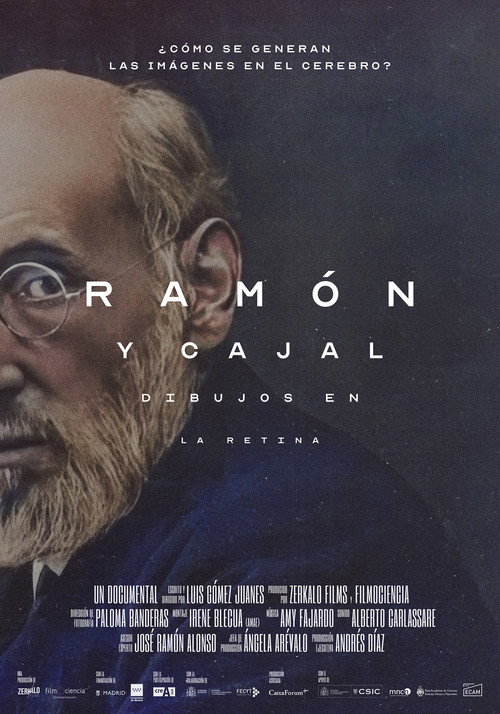
Ramón y Cajal: dibujos en la retina
General admission.
Overview
“Ramón y Cajal: drawings on the retina” is a documentary about the Nobel Prize winner that explores, from a contemporary perspective, his fascination with images as a bridge between the reality of the physical world and that created in the brain, with a new integrative approach to his artistic and scientific facets and his legacy, told through the experiences and points of view of researchers, artists, historians, family members, and other experts who consider Cajal a visionary who transcended his own science. In one of the laboratories, a machine answers Cajal's last question: how are images formed in the brain?
Trailers

Ramón y Cajal: dibujos en la retina (Trailer Oficial)
Recommendations
Naqoyqatsi
A visual montage portrait of our contemporary world dominated by globalized technology and violence.
Being James Bond
Daniel Craig candidly reflects on his 15 year adventure as James Bond. Including never-before-seen archival footage from Casino Royale to the upcoming 25th film No Time To Die, Craig shares his personal memories in conversation with 007 producers, Michael G Wilson and Barbara Broccoli.

Cameraperson
As a visually radical memoir, CAMERAPERSON draws on the remarkable footage that filmmaker Kirsten Johnson has shot and reframes it in ways that illuminate moments and situations that have personally affected her. What emerges is an elegant meditation on the relationship between truth and the camera frame, as Johnson transforms scenes that have been presented on Festival screens as one kind of truth into another kind of story—one about personal journey, craft, and direct human connection.
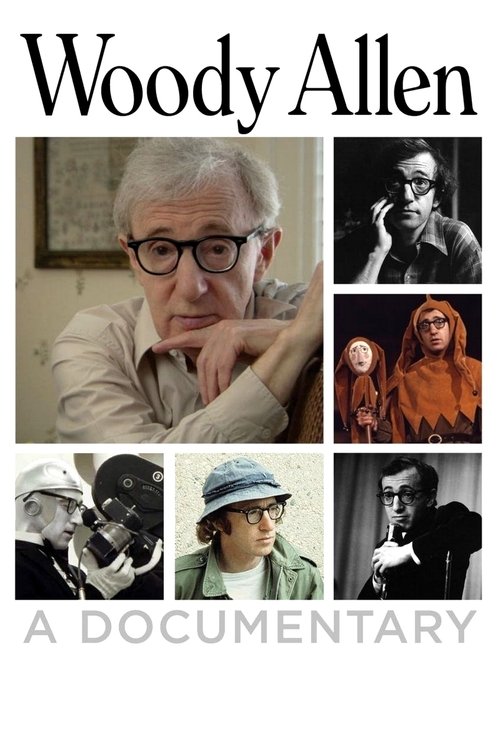
Woody Allen: A Documentary
An intense portrait of the iconic filmmaker, writer, actor, comedian and musician Woody Allen: his life, family and friends; his writing and directing habits, and his relationship with performers.
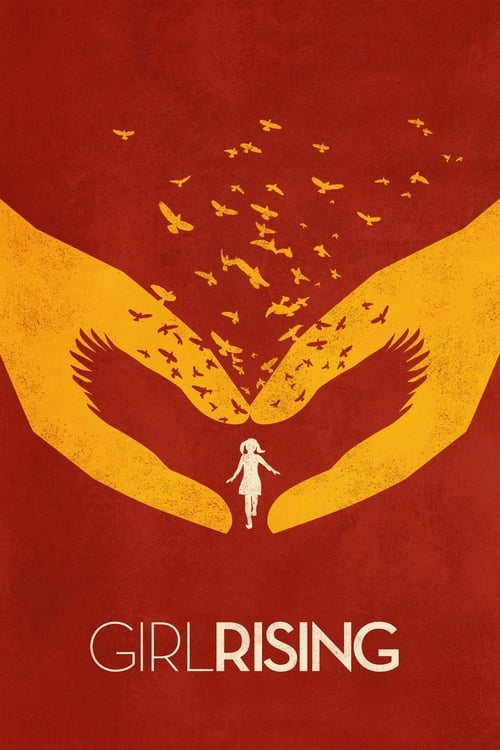
Girl Rising
Nine filmmakers each profile a young girl from a different part of the world to weave a global tapestry of youth in the 21st century.
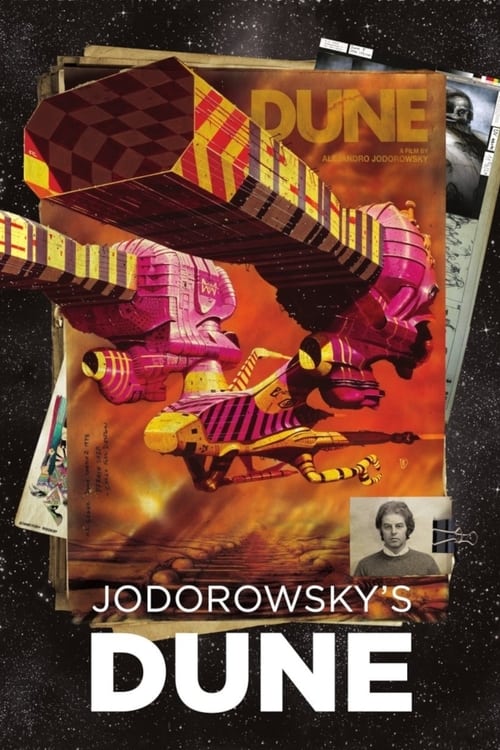
Jodorowsky's Dune
In 1974, Chilean-French director Alejandro Jodorowsky embarked on the quixotic project of adapting Frank Herbert's influential novel Dune (1969) for the big screen. After investing two years, and millions of dollars, the gigantic project ended in failure; but the artists Jodorowsky brought together to carry it out continued to work together, and ended up laying the foundations for modern science fiction cinema.
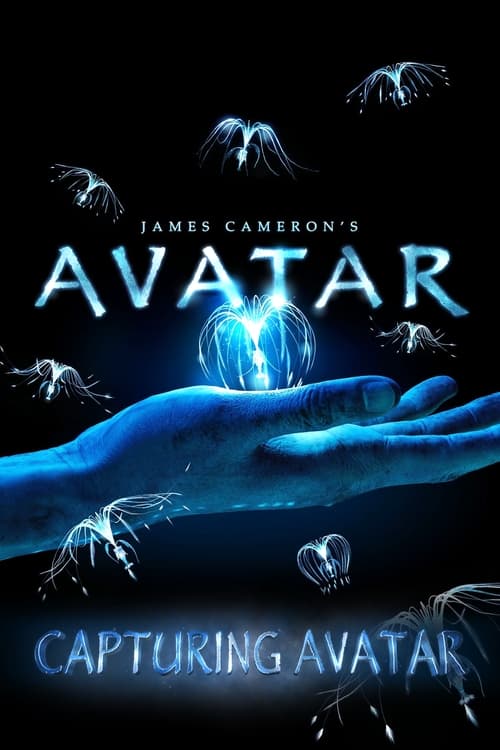
Capturing Avatar
Capturing Avatar is a feature length behind-the-scenes documentary about the making of Avatar. It uses footage from the film's development, as well as stock footage from as far back as the production of Titanic in 1995. Also included are numerous interviews with cast, artists, and other crew members. The documentary was released as a bonus feature on the extended collector's edition of Avatar.
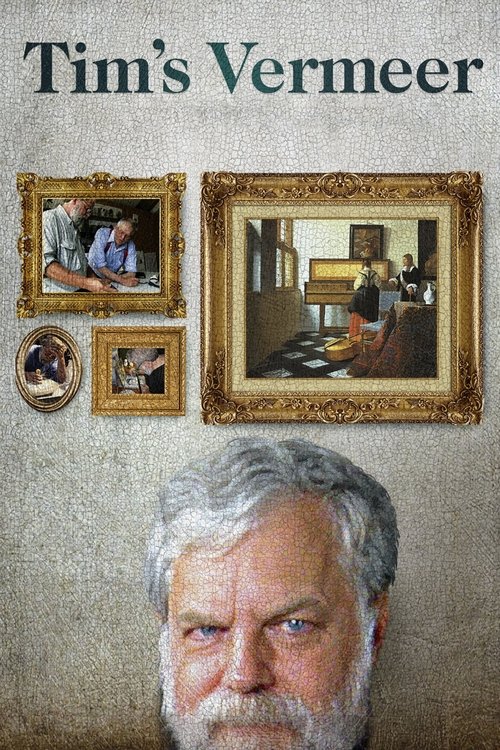
Tim's Vermeer
Tim Jenison, a Texas based inventor, attempts to solve one of the greatest mysteries in all art: How did Dutch Master Johannes Vermeer manage to paint so photo-realistically 150 years before the invention of photography? Spanning a decade, Jenison's adventure takes him to Holland, on a pilgrimage to the North coast of Yorkshire to meet artista David Hockney, and eventually even to Buckingham Palace. The epic research project Jenison embarques on is as extraordinary as what he discovers.
Similar
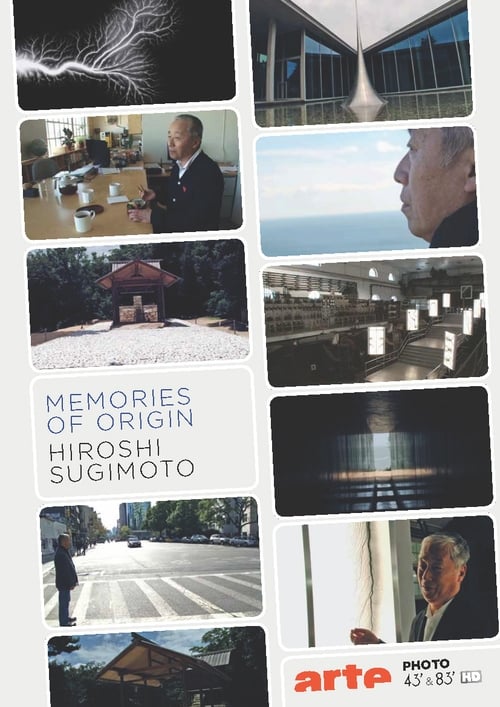
Memories of Origin: Hiroshi Sugimoto
はじまりの記憶 杉本博司
This documentary follows 200 days in the life of contemporary artist Hiroshi Sugimoto— a leading presence in the world of modern art. He is the winner of many prestigious awards and his photographs are sold for millions of yen at overseas auctions. The film shows the sites of the Architecture series shot in southern France, the huge installation art work at 17th Biennale of Sydney, his new work Mathematics at Provence, his art studio while working on Lightning Fields, and more. It thoroughly pursues the question Sugimoto's works pose - "living in modern times, what are these works trying to tell us?" A thrilling look into the world of Hiroshi Sugimoto.

Fight Mom
A documentary that follows Michelle "The Karate Hottie" Waterson as she balances life as a mother and professional MMA fighter.
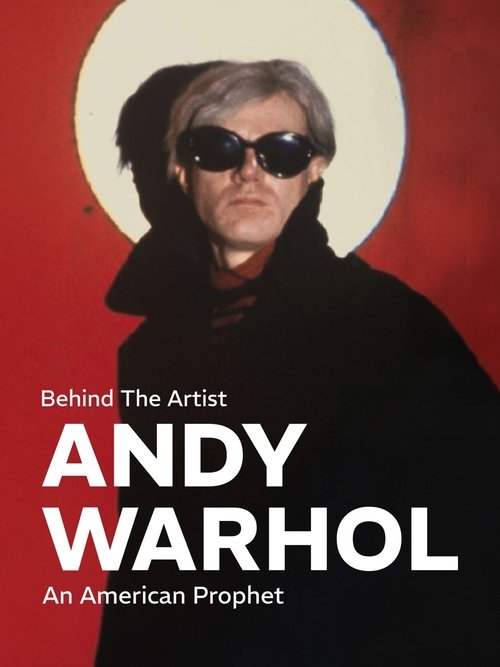
Behind the Artist: Andy Warhol, an American Prophet
This documentary cracks open the meticulously constructed façade of Andy Warhol, exposing the complex figure behind the soup cans and Marilyns. Director Tania Goldenberg traces the transformation of Andrew Warhola, a shy, churchgoing son of Pittsburgh immigrants, into the silver-wigged icon who redefined modern celebrity while deliberately maintaining a lifelong mask. Behind the iconic person...
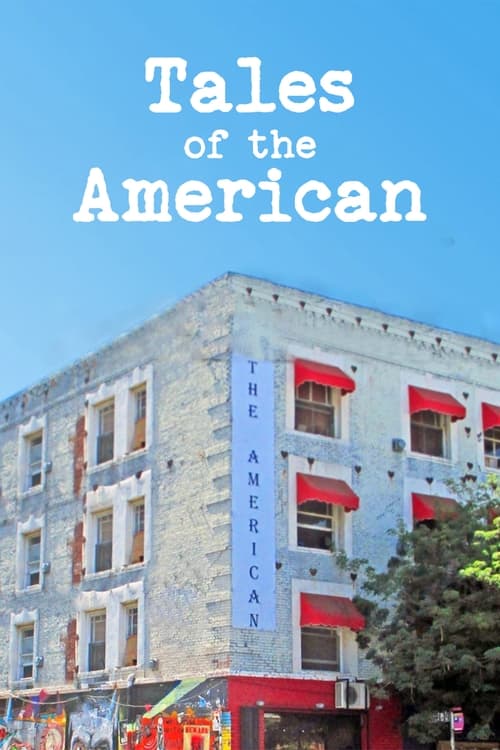
Tales of the American
Seemayer Studios presents a new documentary about the American Hotel in downtown Los Angeles and the Arts District that surrounds it. Since 1979, the American Hotel has been the beating heart of a rich community of artists who began moving into the deserted factory buildings between Alameda and the Los Angeles River.
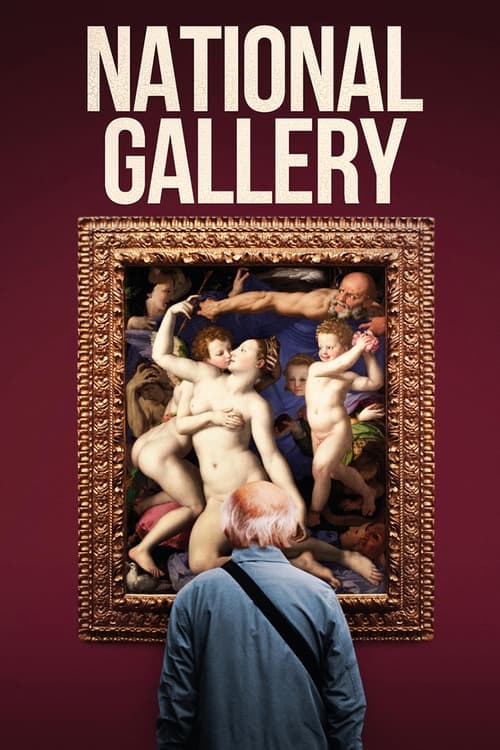
National Gallery
A portrait of the day-to-day operations of the National Gallery of London, that reveals the role of the employees and the experiences of the Gallery's visitors. The film portrays the role of the curators and conservators; the education, scientific, and conservation departments; and the audience of all kinds of people who come to experience it.

RM: Right People, Wrong Place
알엠: 라이트 피플, 롱 플레이스
Chronicles artist RM's eight-month production of his second solo album, “Right Place, Wrong Person,” while candidly recording the endless concerns of the person Kim Namjoon, and the things he immerses himself in and loves.
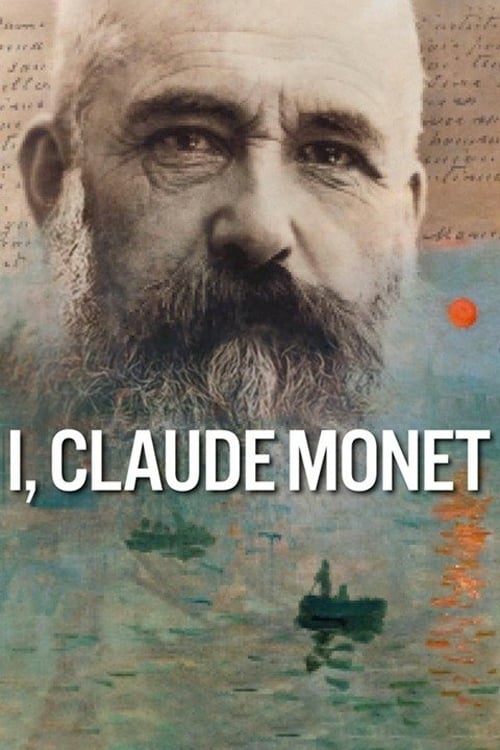
I, Claude Monet
From award-winning director Phil Grabsky comes this fresh new look at arguably the world’s favourite artist – through his own words. Using letters and other private writings I, Claude Monet reveals new insight into the man who not only painted the picture that gave birth to impressionism but who was perhaps the most influential and successful painter of the 19th and early 20th centuries. Despite this, and perhaps because of it, Monet’s life is a gripping tale about a man who, behind his sun-dazzled canvases, suffered from feelings of depression, loneliness, even suicide. Then, as his art developed and his love of gardening led to the glories of his garden at Giverney, his humour, insight and love of life is revealed. Shot on location in Paris, London, Normandy and Venice I, Claude Monet is a cinematic immersion into some of the most loved and iconic scenes in Western Art.
Electronic Poem
Poème Électronique
Poème Électronique is an 8-minute piece of electronic music by composer Edgard Varèse, written for the Philips Pavilion at the 1958 Brussels World’s Fair. The Philips corporation commissioned Le Corbusier to design the pavilion, which was intended as a showcase of their engineering progress. The pavilion was shaped like a stomach, with a narrow entrance and exit on either side of a large central space. As the audience entered and exited the pavilion, the electronic composition Concret PH by Iannis Xenakis (who also acted as Le Corbusier's architectural assistant for the pavilion's design) was heard. Poème électronique was synchronized to a film of black and white photographs selected by Le Corbusier which touched on vague themes of human existence.